How Engraving Works: Laser, Rotary, Diamond Drag and Hand Engraving
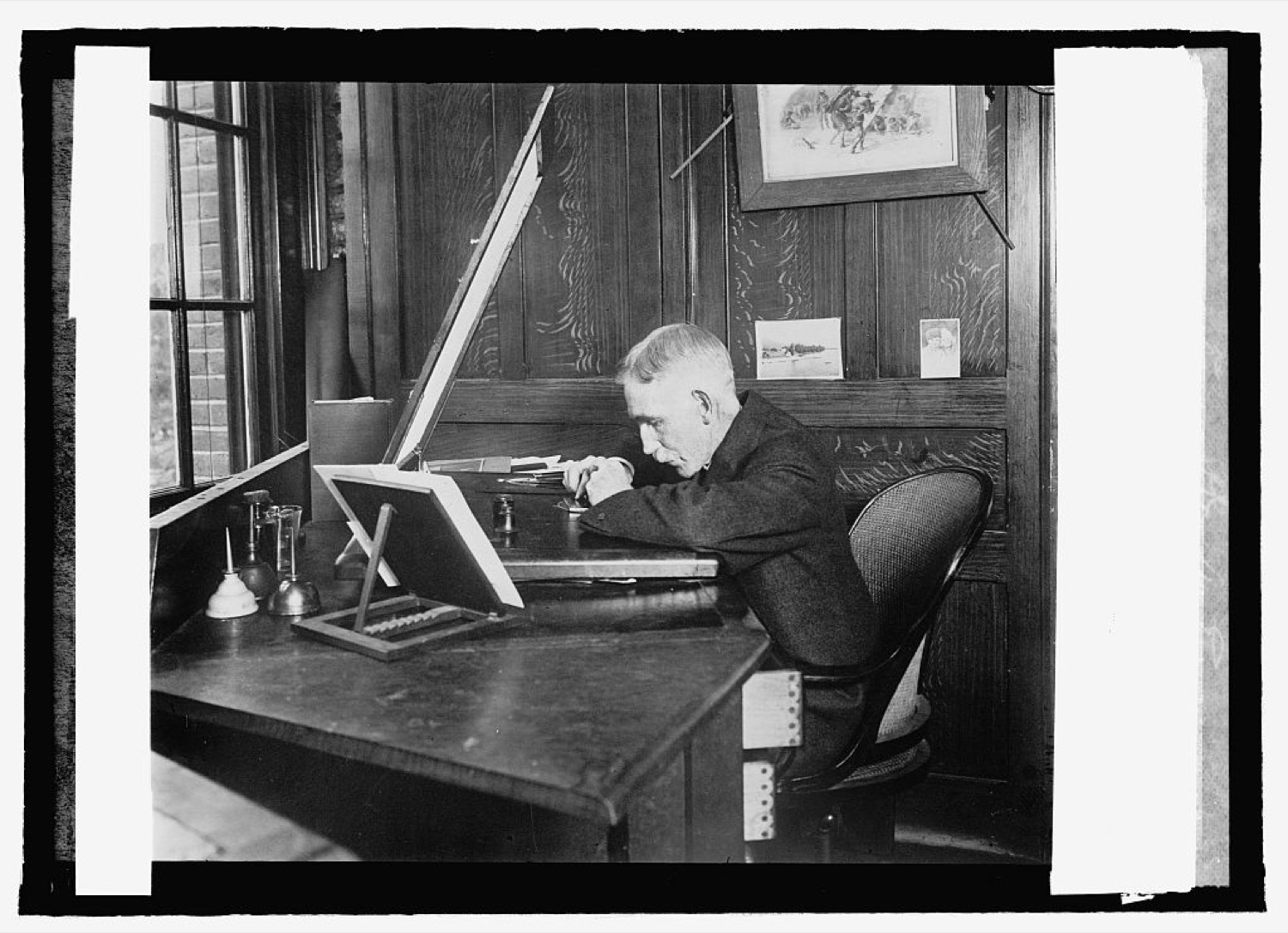
An engraver at work at his bench in an early twentieth-century photograph. Photo: National Photo Company Collection, Public domain, via Wikimedia Commons.
- Department: Gifts
- Published: 24 February 2026
- Reading time: 4 minutes
How personalised engraving works: laser, rotary, diamond-drag, sandblasting and hand engraving, which materials suit each, fonts and limits, plus custom poker chips.
"Glassware, ceramic, wood, metal: you name it, it can be personalised." That was the promise of the personalised-gift shops of the 2000s and 2010s, and it is broadly true. But each material is marked in a different way, and knowing how engraving is done helps you choose a gift that looks good and lasts.
The main methods
| Method | How it works | Best on | Look |
|---|---|---|---|
| CO2 laser | A focused infrared beam burns or vaporises a thin layer of the surface | Wood, leather, glass, acrylic, slate, coated metals | Dark burn on wood, frosted on glass, pale on slate |
| Fibre laser | A shorter-wavelength laser marks or anneals bare metal | Stainless steel, titanium, aluminium, some precious metals | Crisp dark or coloured marks, very fine detail |
| Rotary engraving | A spinning cutter carves a groove | Trophies, plaques, brass, plastics | Deep, tactile lettering |
| Diamond drag | A diamond tip is dragged across the surface, scratching a fine line | Pens, jewellery, watches, silver, pewter | Bright, sparkling line lettering |
| Sandblasting | Abrasive is blasted through a stencil | Glass and crystal | Deep frosted etch, very durable |
| Hand engraving | An engraver cuts the metal with gravers (burins) | Silver, gold, gun metal, fine jewellery | The most characterful, and the most expensive |
Laser engraving: the workhorse of personalised gifts
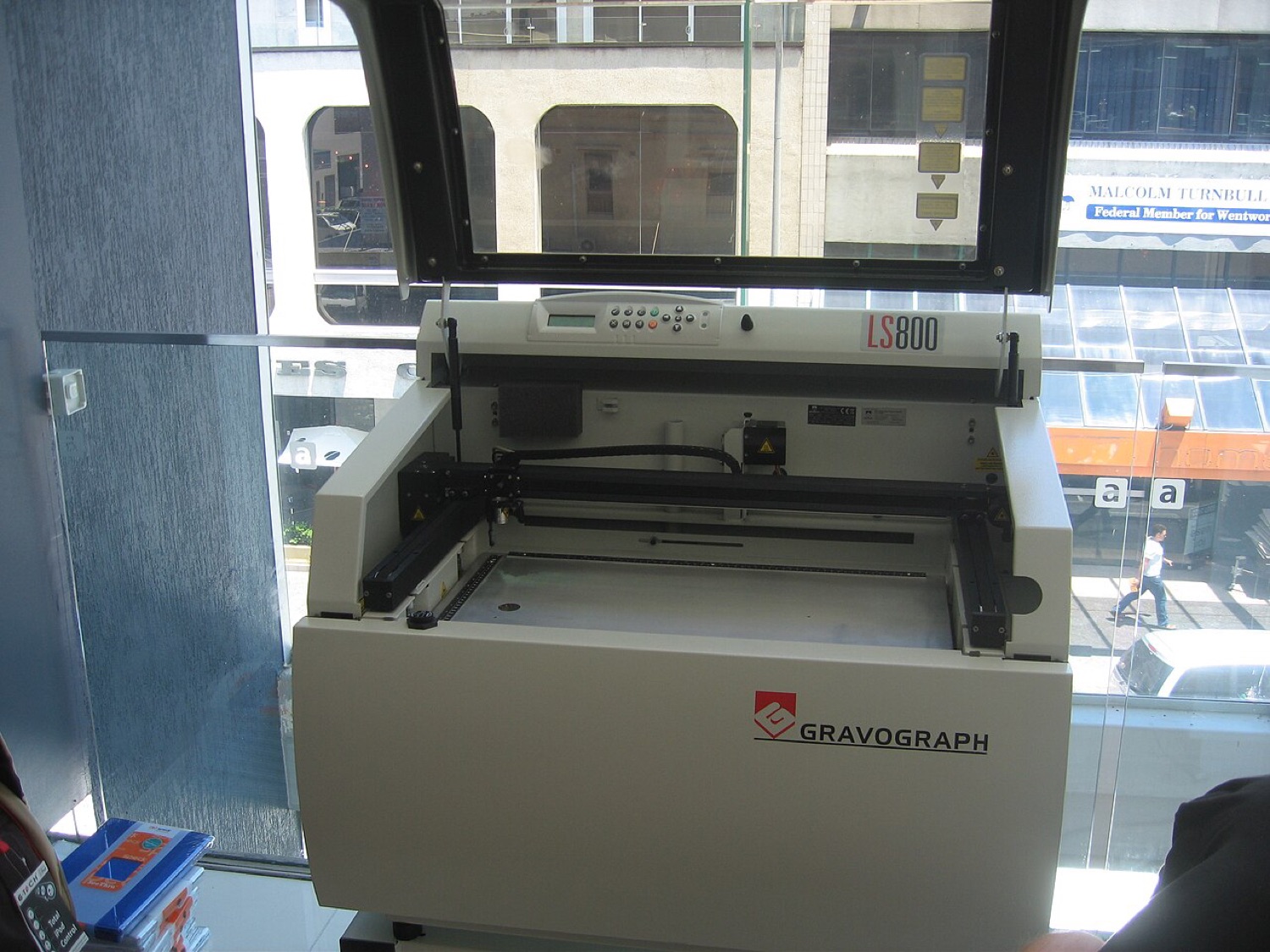
Most of the personalised gifts sold in Britain today are laser-engraved. The customer's text is dropped into a template, the template is sent to the laser and the machine marks the item in seconds or minutes. That is why so many online gift shops ask you to check your personalisation carefully at checkout: it often goes straight into an automated production queue and cannot be changed afterwards.
On wood, a laser leaves a warm brown burn that looks particularly good on oak photo cubes and chopping boards. On glass it creates thousands of tiny fractures that appear as a frosted white mark; it is permanent but slightly rougher than sandblasting. On slate the laser lifts the dark surface to reveal a paler grey beneath. On leather it darkens and slightly indents the surface.
Metals: why your cufflinks look different from your hip flask
Bare stainless steel, the material of most modern hip flasks and tankards, is usually marked with a fibre laser, which produces a dark, sharp mark. Painted or powder-coated flasks are often engraved with a CO2 laser that removes the coating to reveal the silver metal underneath. Silver and gold jewellery and pens are frequently diamond-drag engraved, which gives that bright, shiny line. Cheap plated items can be tricky: engrave too deep and you go through the plating.
Fonts, sizes and what can go wrong
- Script fonts look elegant but become hard to read at small sizes. On cufflinks, rings and keyrings, choose a simple serif or sans-serif.
- Character limits exist for a reason. Squeezing thirty characters onto a line built for fifteen makes the letters tiny.
- Capitals are easier to read on small items; mixed case is friendlier on large ones.
- Special characters such as accents may not be supported by automated systems. Ask before ordering a name like Zoë or Seán.
- Curved surfaces such as glasses and tankards need a rotary attachment on the laser; text near the base or rim may distort.
From poker chips to card guards: personalisation at the card table
One of the most satisfying things to personalise is a set of poker chips, and it shows how many techniques can meet in one object. Casino chips have long been works of design: moulded clay-composite or ceramic discs with inlaid labels, edge spots and, in many modern casinos, hidden security features such as UV marks or embedded RFID tags that let the house track chips and spot counterfeits. Home sets borrow the look. Custom chips for a home game usually have a printed inlay sticker in the centre (your initials, a logo, a wedding date) set into a clay-composite body, while ceramic chips can be printed edge to edge with any design.
The metal card guard, the small weight a player places on their two hole cards in Texas Hold'em, is where engraving comes into its own. A heavy brass or steel guard with a name and a date, laser- or diamond-engraved, makes a personal gift for anyone who plays regularly. Our guide to gifts for poker players covers chip weights, materials and what a full personalised set should include, and if you are hosting, see casino-night party ideas for using custom chips as party favours.
Caring for engraved gifts
Laser-engraved and sandblasted glass is permanent, but hand-washing will keep it looking its best; printed glass is more delicate. Engraved wood can be refreshed with a little food-safe oil (chopping boards) or furniture wax (frames and boxes). Engraved silver will tarnish like any silver; polish gently with a cloth so you do not soften the edges of the letters.
Check the proof against the original names and dates, then ask someone else to check it too. Our wording guide has a full proofreading checklist.
Engraving is only one way to personalise. For photos and full-colour designs, see how printed photo gifts are made.
Related Guides
Premium Bonds as a Gift
Luck & Play
Personalised Home Accessories
Home Accessories
Thumbnail photos via Wikimedia Commons: Christmas Tags Template (Renjishino, CC BY 3.0); Money box shaped like ERNIE the Computer (Science Museum, London) (Geni, CC BY-SA 4.0); Christmas Tree and Presents (Alhill42, CC BY-SA 4.0); Charcuterie board - Massachusetts (Daderot, CC0).